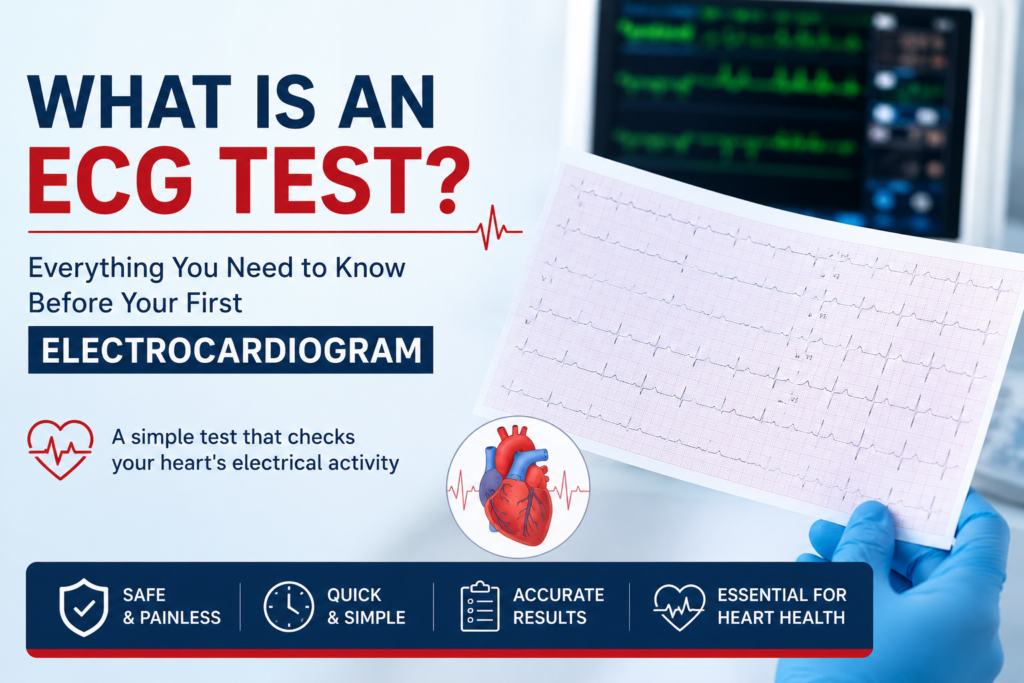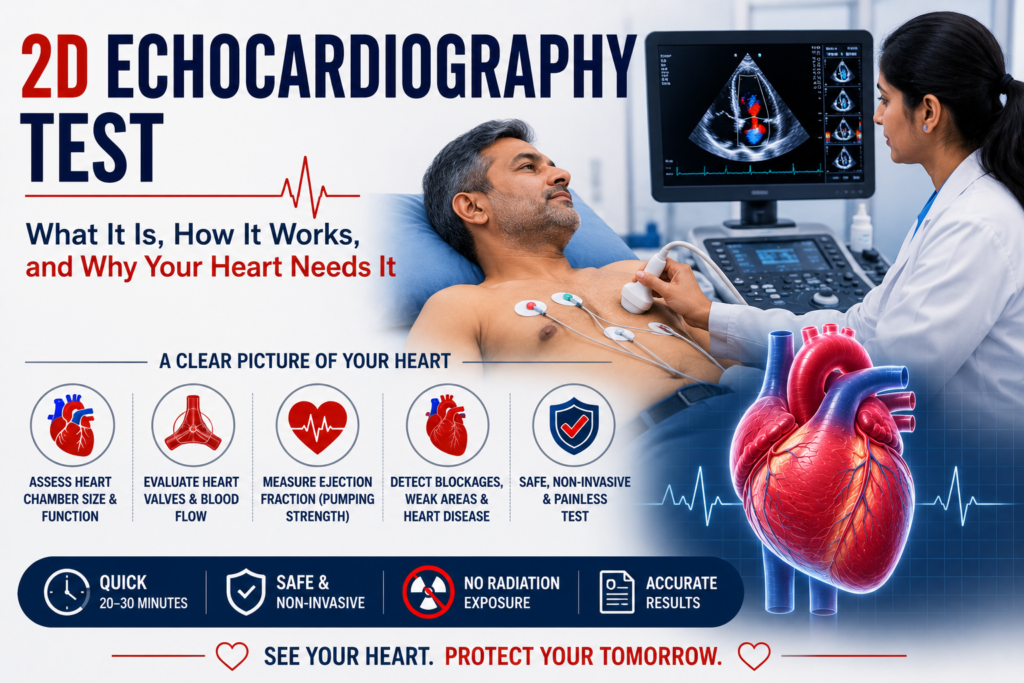



There is a fundamental problem with testing the heart at rest — many cardiac conditions only reveal themselves when the heart is under physical demand. A person with significant coronary artery disease may have a perfectly normal resting ECG and 2D Echo, yet develop dangerous electrical changes the moment their heart rate rises during exertion. This is precisely why the TMT stress test exists. It is the most reliable, widely available, and clinically proven method of unmasking heart disease that hides at rest and surfaces only during physical activity.
If your cardiologist has recommended a TMT stress test, or if you want to fully understand this investigation before your appointment, this comprehensive guide by Dr. T. Sandeep — Interventional Cardiologist at Jayam Hrudayalaya — covers everything from what the test involves to how results are interpreted and what happens next.
What is a TMT Stress Test?
The TMT stress test — Treadmill Test — is a cardiac investigation that monitors your heart’s electrical activity, blood pressure, and symptoms while you walk on a motorised treadmill at progressively increasing speeds and inclines. It is also called an exercise ECG test because it records a continuous ECG throughout the physical exertion protocol.
The fundamental principle behind the TMT stress test is straightforward: when your body exercises, your heart must work harder to pump more oxygenated blood to the muscles. This increased demand raises the heart rate, increases cardiac oxygen consumption, and stresses the coronary arteries. If any coronary artery has a significant blockage that restricts blood flow under demand — even if it appeared normal at rest — the resulting oxygen deficiency in the heart muscle produces characteristic changes on the ECG that the cardiologist can identify.
The TMT stress test is therefore the frontline investigation for detecting exertional myocardial ischemia — reduced blood supply to the heart that occurs specifically during physical activity.
Why is the TMT Stress Test Done? Clinical Indications
The TMT test cardiac evaluation is recommended in a wide range of clinical situations. Understanding why your doctor has requested this test helps you approach it with the right mindset.
Primary Indications for a TMT Stress Test:
Evaluation of Chest Pain The TMT test for chest pain is one of the most common reasons this investigation is performed. If you experience chest tightness, pressure, or discomfort during physical activity — climbing stairs, walking fast, or carrying weight — the TMT stress test evaluates whether this pain originates from the heart.
Screening for Coronary Artery Disease Patients with multiple cardiac risk factors — diabetes, hypertension, high cholesterol, smoking, obesity, family history of heart disease — benefit from a TMT stress test even before symptoms develop, as part of a comprehensive preventive cardiac evaluation.
Assessment After a Heart Attack Patients recovering from a heart attack undergo a TMT stress test to assess the functional severity of remaining coronary artery disease and to guide decisions about further intervention.
Pre-Operative Cardiac Clearance Before major surgical procedures, particularly in patients above 40 years or those with cardiac risk factors, the TMT stress test provides an objective assessment of cardiac reserve and exercise tolerance.
Evaluation of Known Arrhythmias Some cardiac arrhythmias — particularly those that worsen with exercise — are better assessed and provoked under controlled conditions during a TMT stress test.
Return to Physical Activity After Cardiac Events Athletes or physically active patients recovering from cardiac procedures use the TMT stress test to receive medical clearance for resuming exercise.
Understanding the TMT Stress Test for Heart Blockage
The most important clinical application of the TMT stress test is as a stress test for heart blockage — specifically, blockages in the coronary arteries that supply blood to the heart muscle itself.
Coronary arteries can have significant narrowing (stenosis) — often 50% to 70% of the vessel diameter — that causes no symptoms and produces a normal ECG at rest. The reason is that at rest, even a partially blocked artery can deliver enough blood to meet the heart’s modest oxygen needs. However, during exercise, when oxygen demand increases dramatically, the blocked artery cannot increase flow adequately. The heart muscle it supplies becomes starved of oxygen — a condition called ischemia — which produces the characteristic ST-segment changes on the ECG that define a positive TMT stress test result.
This is why the TMT stress test is called a “stress test for heart blockage” — it functionally uncovers blockages that are haemodynamically significant under demand, even when they are invisible on a resting ECG.
The Treadmill Stress Test Procedure: Step by Step
Understanding the treadmill stress test procedure in detail eliminates anxiety and ensures you are mentally and physically prepared for the investigation.
Step 1 — Pre-Test Assessment
Before beginning the TMT stress test, the cardiologist or trained technician takes your resting blood pressure, records a baseline 12-lead resting ECG, and reviews your symptoms, medications, and medical history. This baseline provides the reference against which all exercise changes are compared.
Step 2 — Electrode and Cuff Attachment
Ten ECG electrodes are placed on your chest in standard positions, secured firmly to maintain continuous contact during exercise. A blood pressure cuff is placed on your arm for repeated measurements throughout the test.
Step 3 — The Bruce Protocol — Standard Exercise Stages
The TMT stress test most commonly follows the Modified Bruce Protocol or Standard Bruce Protocol — a series of treadmill stages, each lasting 3 minutes, with progressively increasing speed and incline:
| Stage | Speed (km/h) | Grade (%) | Approximate MET Level |
|---|---|---|---|
| Stage 1 | 2.7 | 10% | 4–5 METs |
| Stage 2 | 4.0 | 12% | 6–7 METs |
| Stage 3 | 5.5 | 14% | 9–10 METs |
| Stage 4 | 6.8 | 16% | 12–13 METs |
| Stage 5 | 8.0 | 18% | 14–16 METs |
The goal is to reach your target heart rate — which is calculated as 85% of your maximum predicted heart rate (220 minus your age). For example, a 50-year-old patient has a maximum predicted heart rate of 170 bpm, and the TMT target is 85% of that — approximately 144 bpm.
Step 4 — Continuous Monitoring During Exercise
Throughout every stage, the cardiologist monitors your ECG in real time for ischemic changes, arrhythmias, or ST-segment deviations. Blood pressure is measured every 3 minutes. You are asked to report any symptoms — chest pain, breathlessness, dizziness, or leg fatigue — immediately.
Step 5 — Recovery Phase Monitoring
After reaching the target heart rate or stopping for any reason, you slow down and the ECG and blood pressure continue to be monitored for a recovery period of 5–10 minutes. Some ischemic changes appear only during recovery rather than during peak exercise — making this phase clinically critical.
Step 6 — Post-Test Report
The cardiologist reviews the complete exercise ECG recording, blood pressure response, heart rate achieved, symptoms reported, and any significant findings to generate the final TMT stress test report.
TMT Test Preparation Fasting: What to Do Before Your Test
TMT test preparation fasting and other pre-test instructions are important to follow carefully for accurate results and your safety:
Dietary Preparation:
- Fast for a minimum of 3–4 hours before the test. A light snack 2–3 hours prior is acceptable; a heavy meal immediately before the test is not, as it diverts blood to the digestive system and can cause nausea during exercise
- Avoid caffeine (tea, coffee, energy drinks) for at least 12 hours before the test, as caffeine can blunt ischemic ST changes and cause false-negative results
- Avoid smoking for at least 3–4 hours before the test
- Stay well hydrated — drink water normally up to 1 hour before the test
Medication Instructions:
- Do not stop medications without specific instruction from your cardiologist
- However, beta-blockers (atenolol, metoprolol, bisoprolol) and calcium channel blockers may be asked to be withheld 24–48 hours before the test, as these drugs lower heart rate and may prevent you from reaching your target heart rate, resulting in an inconclusive study
- Always clarify your medication plan with your cardiologist when the test is scheduled
Clothing and Footwear:
- Wear comfortable, loose-fitting exercise clothing — a t-shirt and track pants are ideal
- Wear sturdy, well-fitted walking or running shoes — not sandals, slip-ons, or formal footwear
- Women should wear a well-fitting sports bra to allow proper electrode placement on the chest
General Preparation:
- Avoid strenuous exercise for 24 hours before the test
- Inform the cardiologist if you have any joint problems, balance issues, or physical limitations that might affect treadmill walking
- Bring all previous cardiac reports, ECGs, and your complete list of medications
Treadmill Test Heart Rate: Target, Maximum, and What It Means
The treadmill test heart rate target is the cornerstone of a valid and interpretable TMT stress test. A test is considered adequate — meaning it can be reliably interpreted — only when the patient achieves at least 85% of their maximum predicted heart rate.
Target Heart Rate Formula:
Maximum Predicted Heart Rate = 220 − Age (in years) Target Heart Rate = 85% of Maximum Predicted Heart Rate
Target Heart Rate by Age:
| Age | Maximum Predicted HR | TMT Target HR (85%) |
|---|---|---|
| 30 years | 190 bpm | 162 bpm |
| 40 years | 180 bpm | 153 bpm |
| 50 years | 170 bpm | 145 bpm |
| 60 years | 160 bpm | 136 bpm |
| 70 years | 150 bpm | 128 bpm |
If the treadmill test heart rate target is not reached — due to patient fatigue, medications, or physical limitations — the test is reported as submaximal and may need to be supplemented with pharmacological stress testing or other investigations.
The treadmill test heart rate response also provides important prognostic information. A patient who achieves a very high workload with normal ECG and appropriate heart rate response has an excellent cardiac prognosis.
TMT Positive Negative Results Meaning: How to Interpret Your Report
Understanding TMT positive negative results meaning is essential for every patient who has undergone this investigation. The terminology can be confusing — here is a clear, comprehensive explanation.
TMT Negative (Normal) Result
A negative TMT means the test did not reveal any evidence of myocardial ischemia. Specifically:
- The patient achieved the target heart rate without significant ECG changes
- No ST-segment depression or elevation was observed
- Blood pressure responded normally — rising with exercise and falling during recovery
- No significant arrhythmias were provoked
- No symptoms of chest pain, breathlessness, or dizziness were reported
A negative TMT stress test at an adequate workload is highly reassuring and suggests that significant flow-limiting coronary artery disease is unlikely. However, it does not completely rule out all cardiac conditions.
TMT Positive (Abnormal) Result
A positive TMT means the test revealed evidence suggesting myocardial ischemia. The classical criterion for a positive test is:
- Horizontal or downsloping ST-segment depression of ≥ 1 mm (0.1 mV) persisting for ≥ 80 milliseconds after the J-point, in at least two consecutive leads
- ST-segment elevation in leads without prior Q waves (indicating severe ischemia or vasospasm)
- Significant new arrhythmias provoked during exercise
- Exertional chest pain coinciding with ST changes
- Abnormal blood pressure response — failure to rise (flat response) or a fall in blood pressure during exercise (hypotension)
A positive TMT does not automatically mean a heart attack is imminent — but it indicates that further evaluation, almost always a coronary angiogram, is required to directly visualise the coronary arteries and determine the severity and location of blockages.
Inconclusive or Equivocal TMT Result
Some TMT stress tests yield equivocal results — borderline ST changes that neither clearly confirm nor exclude ischemia. In these cases, the cardiologist may recommend:
- Repeat TMT after medication adjustment
- Nuclear stress test (myocardial perfusion imaging)
- CT coronary angiography
- Conventional coronary angiogram
Who Needs TMT Test: Age, Risk, and Indication Guide
Who needs TMT test is a practical question with a clear, evidence-based answer. The following individuals should discuss a TMT stress test with their cardiologist:
High Priority — Strongly Recommended:
- Anyone with exertional chest pain, tightness, or jaw/arm pain during physical activity
- Diabetic patients above 40 — especially since diabetes causes silent ischemia without chest pain symptoms
- Hypertensive patients with multiple additional risk factors
- Patients with strong family history (first-degree relative with heart attack before age 55)
- Smokers above 40 with any cardiac symptoms
- Patients recovering from a heart attack or angioplasty
Moderate Priority — Consider Evaluation:
- Men above 45 and women above 55 with two or more cardiac risk factors, even without symptoms
- Individuals beginning a vigorous exercise programme after being sedentary
- Patients with unexplained fatigue, breathlessness on exertion, or reduced exercise tolerance
- Pre-operative cardiac clearance for patients with risk factors before major non-cardiac surgery
Low Priority — Selective Use:
- Asymptomatic young adults with no risk factors — routine TMT is generally not recommended unless a specific indication exists
Cardiac Stress Test India: Access, Cost, and Availability
The cardiac stress test India landscape has improved dramatically over the past decade. TMT testing is now widely available across tier-2 and tier-3 cities, making this critical investigation accessible to patients across the country.
Approximate TMT Test Cost in India:
| Facility Type | Approximate Cost |
|---|---|
| Government Hospital | ₹0 – ₹200 |
| District Private Hospital | ₹500 – ₹1,200 |
| Dedicated Cardiac Clinic | ₹800 – ₹1,800 |
| Corporate / Chain Hospital | ₹1,500 – ₹3,500 |
For BPL cardholders and patients enrolled under PM-JAY (Ayushman Bharat), SAST (Karnataka), or ESI schemes, the cardiac stress test India facilities at empanelled hospitals provide the TMT test either free or at heavily subsidised rates.
Jayam Hrudayalaya in Hosapete offers TMT testing with real-time monitoring by a qualified cardiologist, ensuring that every stage of the exercise protocol is supervised, every ECG change is immediately recognised, and every patient is managed safely from start to finish.
Safety of the TMT Stress Test: What You Need to Know
The TMT stress test is performed under direct medical supervision and is a very safe procedure when correctly indicated. However, like all medical investigations, it carries a small risk that patients should be aware of.
Absolute Contraindications — the test must NOT be performed in:
- Unstable angina or acute coronary syndrome
- Uncontrolled severe hypertension (systolic BP > 200 mmHg)
- Decompensated heart failure
- Severe aortic stenosis
- Active myocarditis, pericarditis, or endocarditis
- Significant resting ECG abnormalities that would make interpretation impossible
Relative Contraindications — require careful cardiologist judgment:
- Left bundle branch block
- WPW syndrome (Wolff-Parkinson-White)
- Electrolyte abnormalities
- High-degree AV block without pacemaker
Stopping Criteria During the Test: The cardiologist will immediately stop the TMT stress test if any of the following occur:
- Significant ST depression or elevation on the ECG
- Dangerous arrhythmias (ventricular tachycardia, complete heart block)
- Fall in systolic blood pressure > 10 mmHg from baseline
- Severe chest pain, severe breathlessness, or near-fainting
- Patient request to stop due to exhaustion or discomfort
The overall risk of a serious adverse event during a properly supervised TMT stress test is approximately 1 in 10,000 tests — making it an extremely safe investigation when conducted by a trained cardiologist with proper resuscitation equipment available.
The Exercise ECG Test vs Other Stress Testing Methods
The exercise ECG test — the standard TMT — is the most widely used stress test, but it is not the only method available. Understanding how it compares to other options helps patients and referring doctors choose the most appropriate investigation.
| Test Type | How Stress is Applied | Best For |
|---|---|---|
| TMT (Exercise ECG) | Treadmill walking | Standard ischemia screening |
| Nuclear Stress Test | Exercise or pharmacological | Localising ischemia, post-angioplasty |
| Stress Echo | Exercise or dobutamine drug | Wall motion abnormality detection |
| CT Coronary Angiography | Contrast dye + CT scan | Anatomical blockage visualisation |
| Conventional Angiogram | Catheter + contrast | Definitive blockage diagnosis |
For the majority of patients undergoing initial evaluation for suspected coronary artery disease, the exercise ECG test — the TMT stress test — is the ideal first-line investigation. It is widely available, affordable, non-invasive, and clinically validated across decades of research.
After Your TMT Test: What Happens Next?
Your cardiologist will discuss results with you immediately after the test in most cases. Here is what to expect based on your result:
If TMT is Negative: You will receive reassurance and guidance on risk factor management, lifestyle modification, and when to return for follow-up. A negative TMT at a good workload is an excellent prognostic sign.
If TMT is Positive: Your cardiologist will recommend a coronary angiogram — the gold standard test for directly visualising your coronary arteries and confirming the location and severity of any blockages. Based on angiogram findings, treatment options range from medical management to coronary angioplasty (PTCA) or bypass surgery.
If TMT is Inconclusive: Further investigations will be tailored to your specific clinical situation and risk profile.
In all cases, the TMT stress test result is never interpreted in isolation — it is always combined with your symptoms, risk factors, resting ECG, 2D Echo findings, and clinical history to arrive at the most accurate and complete cardiac assessment.
Conclusion
The TMT stress test is one of the most valuable, safe, and clinically proven cardiac investigations available. By challenging your heart under controlled physical stress, it reveals ischemia and functional limitations that remain completely hidden during rest — making it an irreplaceable tool in the detection, risk stratification, and management of coronary artery disease.
If your doctor has recommended a TMT stress test, respond promptly. The information this test provides could be genuinely life-saving — catching significant heart disease before it progresses to a heart attack, and directing you toward the right treatment at the right time.
Your heart works tirelessly for you. A TMT stress test is your opportunity to return the favour.