


Your heart beats around 100,000 times every single day. Every beat is triggered by a tiny electrical impulse — and the ECG test is the medical tool that reads, records, and analyses those impulses with remarkable precision. If your doctor has recommended an ECG test, or if you are simply curious about what the procedure involves, this guide covers everything you need to know — from preparation and procedure to results and costs.
What is an ECG Test?
An ECG test — short for Electrocardiogram — is a simple, non-invasive diagnostic test that captures the electrical activity of your heart over a short period of time. The results are displayed as a series of waves on a graph or printed strip, which a trained cardiologist reads to assess the health, rhythm, and function of your heart.
The phrase “heart electrical activity test” perfectly describes what an ECG does: it listens to the electrical language your heart speaks and translates it into a readable pattern. Every time your heart contracts and relaxes, it generates an electrical signal. The ECG machine detects these signals through small electrodes placed on the surface of your skin.
An ECG test is one of the most commonly performed cardiac investigations worldwide. According to the World Health Organization, cardiovascular diseases are the leading cause of death globally — and the ECG remains the front-line diagnostic tool cardiologists rely on first.
Why is an ECG Test Done?
Doctors recommend an ECG test for many different reasons. The most common situations include:
- You are experiencing chest pain, tightness, or pressure
- You have unexplained shortness of breath or fatigue
- You feel palpitations — a rapid, fluttering, or irregular heartbeat
- You have had episodes of dizziness or fainting
- You are being evaluated before a surgical procedure
- You have a known family history of heart disease
- You are diabetic or have high blood pressure and need regular monitoring
- You are above 40 years of age and want a routine heart check
Understanding when to get an ECG is important. You do not always need symptoms to justify this test. Preventive cardiac screening — especially for individuals over 35 with lifestyle risk factors — often begins with an ECG test as the baseline investigation.
The Electrocardiogram Test Procedure: Step by Step
Many patients feel anxious before their first ECG. Understanding the electrocardiogram test procedure in advance will help you feel calm and prepared. Here is exactly what happens during the test:
Step 1 — Preparation
You will be asked to lie flat on an examination table. There is no need to fast before an ECG test. Wear comfortable, loose-fitting clothing that allows easy access to your chest, arms, and legs.
Step 2 — Electrode Placement
A trained technician will place small adhesive patches called electrodes on specific locations on your body. Typically, 10 electrodes are placed — four on your limbs (wrists and ankles) and six on your chest in precise positions around the heart.
Step 3 — Recording
The electrodes are connected via wires to the ECG machine. The machine records the electrical signals from your heart from 12 different angles — which is why a standard ECG is called a 12-lead ECG. You will be asked to lie still and breathe normally. Moving or talking during recording can create artefacts that interfere with the reading.
Step 4 — Completion
The entire recording takes less than 60 seconds. The machine prints out the ECG strip — or saves it digitally — and the procedure is complete.
How Long Does an ECG Take?
How long does an ECG take is one of the most commonly asked questions. The actual heart recording takes under 60 seconds. Including preparation, electrode placement, and completion, the entire visit for an ECG test is typically finished within 5 to 10 minutes. There is no recovery time. You can resume all normal activities, including driving, immediately after.
Is an ECG Test Painful?
This is among the most frequently asked patient questions — and the answer is clear: No, an ECG test is not painful at all.
Is ECG test painful? Absolutely not. The electrodes placed on your skin are simple adhesive patches, similar to a plaster. They only detect — they do not deliver — any electrical current. You will not feel any shock, discomfort, or sensation during the test. The only mild discomfort some patients experience is when the adhesive electrodes are removed from skin, particularly if they have body hair — similar to peeling off a bandage. The test itself is completely pain-free and safe for all age groups, including children, pregnant women, and elderly patients.
What Does the ECG Test Measure?
The ECG test produces a waveform pattern consisting of several labelled components that cardiologists interpret:
- P Wave — Represents electrical activity through the upper chambers (atria) of the heart
- QRS Complex — Represents electrical activation of the lower chambers (ventricles), which is the main pumping action
- T Wave — Represents the recovery (repolarisation) of the ventricles
- PR Interval — Time taken for the electrical signal to travel from the atria to the ventricles
- ST Segment — Critically important; elevation or depression here indicates possible heart attack or ischemia
A cardiologist analyses these components together to determine the health of your heart’s electrical conduction system, its rate, its rhythm, and the condition of the heart muscle.
ECG Test for Heart Problems: What Conditions Can It Detect?
The ECG test for heart problems has a wide diagnostic range. A skilled cardiologist can identify or suspect the following conditions from ECG findings:
1. Arrhythmias (Abnormal Heart Rhythms) Conditions like atrial fibrillation, atrial flutter, ventricular tachycardia, or complete heart block are clearly visible on an ECG.
2. Heart Attack (Myocardial Infarction) A heart attack causes characteristic ST-segment elevation or depression on the ECG, making it a critical tool in emergency cardiac care.
3. Ischemia (Reduced Blood Flow to the Heart) Even before a full heart attack, reduced blood supply causes subtle ECG changes that a trained cardiologist can detect.
4. Left or Right Ventricular Hypertrophy Enlargement of the heart chambers due to long-standing high blood pressure or valve disease produces characteristic voltage changes.
5. Bundle Branch Blocks Delays or blocks in the electrical pathways of the heart are precisely identified on ECG.
6. Electrolyte Imbalances Dangerous levels of potassium or calcium in the blood alter ECG waveform patterns, alerting the doctor to systemic problems affecting the heart.
7. Pericarditis (Inflammation of the Heart Lining) Produces a characteristic diffuse ST-elevation pattern distinct from a heart attack.
ECG Test Results Explained: Normal vs Abnormal
Understanding your ECG test results explained clearly can relieve anxiety and help you have a better conversation with your cardiologist.
Normal ECG Results
A normal ECG result — documented as “within normal limits” — means:
- Heart rate is between 60 and 100 beats per minute
- The rhythm is regular (sinus rhythm)
- All wave intervals (PR, QRS, QT) are within accepted reference ranges
- There are no ST-segment changes
- No signs of ischemia, infarction, or hypertrophy
A normal ECG is reassuring, but it does not completely rule out all heart conditions. Some conditions, like intermittent arrhythmias or early coronary artery disease, may not show on a resting ECG.
Abnormal ECG Results
ECG test normal vs abnormal results — an abnormal ECG does not always mean you have a serious heart problem. Context matters enormously. Some abnormal findings are incidental and clinically insignificant. Others require urgent evaluation.
Common abnormal ECG findings and their significance:
| ECG Finding | Possible Meaning |
|---|---|
| ST Elevation | Possible heart attack (STEMI) — urgent |
| ST Depression | Ischemia or NSTEMI — urgent |
| Wide QRS | Bundle branch block or ventricular rhythm |
| Long QT Interval | Risk of sudden arrhythmia |
| Atrial Fibrillation | Irregular rhythm, stroke risk |
| Left Ventricular Hypertrophy | Long-standing hypertension |
| Low Voltage | Pericardial effusion, hypothyroidism |
Always have your ECG results interpreted by a qualified cardiologist rather than relying solely on machine-generated auto-analysis. The machine reads patterns — the cardiologist understands your complete clinical picture.
How to Prepare for an ECG Test
Preparing for an ECG test is straightforward:
- No fasting required — You can eat and drink normally before the test
- Avoid oily lotions or creams on your chest and limbs on the day of the test, as these can interfere with electrode adhesion
- Wear a two-piece outfit if possible, so your chest can be accessed easily without fully undressing
- Avoid excessive physical exertion immediately before a resting ECG
- Inform the technician about any medications you are taking, as some drugs affect ECG patterns
- Avoid shivering — tell the technician if you feel cold, as muscle tremors create artefacts on the recording
There is no special preparation needed beyond these simple steps.
ECG Test Cost in India
ECG test cost India is one of the most searched questions by patients planning their cardiac checkup. The cost varies depending on the type of facility:
| Facility Type | Approximate ECG Cost |
|---|---|
| Government Hospital | ₹0 – ₹50 |
| Primary Health Centre | ₹50 – ₹150 |
| Diagnostic Centre | ₹150 – ₹400 |
| Private Hospital / Cardiology Clinic | ₹300 – ₹800 |
| Corporate Hospital | ₹500 – ₹1,500 |
At Jayam Hrudayalaya in Hosapete, the ECG test is performed at affordable rates with same-day results interpreted directly by Dr. T. Sandeep (MBBS, MD, DNB Cardiology). Patients enrolled under PM-JAY (Ayushman Bharat), SAST, or other BPL government schemes can avail the ECG test at zero cost as part of their covered cardiac evaluation.
ECG vs Other Cardiac Tests: Understanding the Difference
Patients often ask how an ECG compares to other heart tests. Here is a brief comparison to help you understand when each test is appropriate:
| Test | What It Measures | Time Required | Best For |
|---|---|---|---|
| ECG | Electrical activity at rest | 5–10 minutes | Rhythm, rate, ischemia |
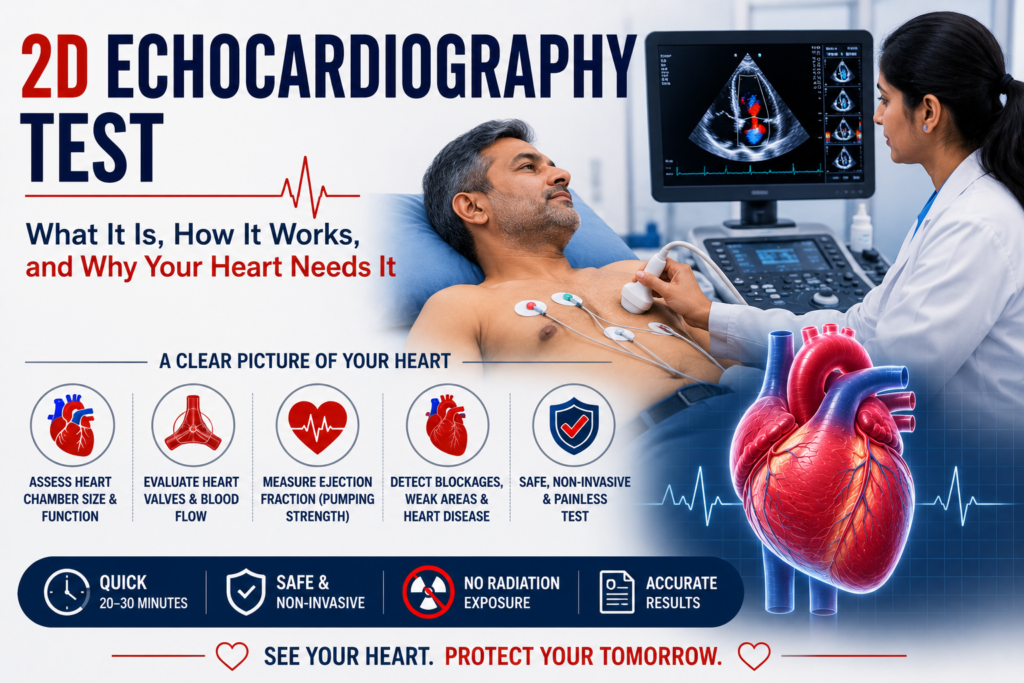
| 2D Echo | Heart structure & function | 20–30 minutes | Valves, chambers, EF% |
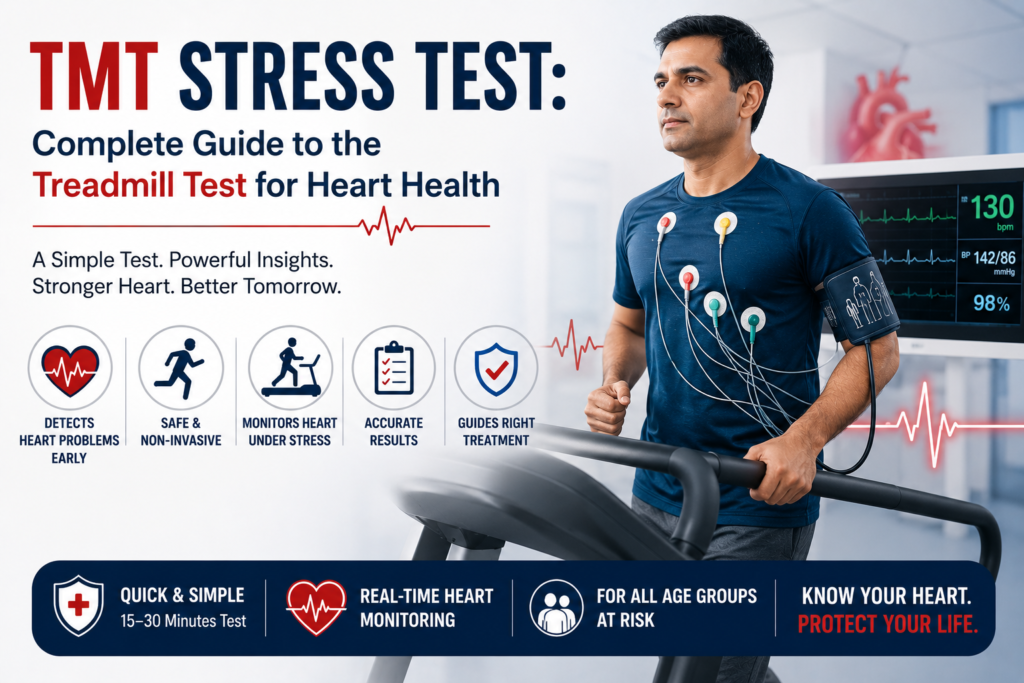
| TMT | Heart under exercise stress | 30–45 minutes | Exertional ischemia |
| Holter Monitor | 24–48 hour ECG recording | 24–48 hours | Intermittent arrhythmias |
| Angiogram | Coronary artery blockages | 1–2 hours | Confirmed blockage |
For most patients, the ECG test is always the first investigation performed. It is quick, painless, inexpensive, and provides an enormous amount of information about the heart’s electrical health.
When Should You Get an ECG Immediately?
Call for emergency cardiac care immediately and ask for an urgent ECG test if you experience any of the following:
- Severe chest pain or pressure, especially radiating to the left arm, jaw, or back
- Sudden breathlessness at rest or while lying flat
- Loss of consciousness or near-fainting episodes
- Heart rate above 150 or below 40 beats per minute felt as palpitations
- Sudden onset of irregular heartbeat
These symptoms may indicate a heart attack or life-threatening arrhythmia. Do not wait for a scheduled appointment — seek emergency care immediately.
Who Should Get a Routine ECG Test?
Beyond emergencies, the following individuals should schedule a routine ECG test as preventive cardiac screening:
- Age above 40 — Annual ECG as part of routine health check
- Diabetics — Annual ECG even without symptoms, as diabetes causes silent heart disease
- Hypertensive patients — Six-monthly ECG to monitor for hypertrophy or ischemic changes
- Smokers and tobacco users — Annual ECG due to increased coronary artery disease risk
- Patients with family history of heart disease — Baseline ECG from age 30 onward
- Pre-operative patients — Mandatory ECG before any surgery
- Athletes — Baseline ECG to detect rare structural heart conditions
Why Choose Jayam Hrudayalaya for Your ECG Test?
At Jayam Hrudayalaya — Unit of Sripathi Multispeciality Hospital — your ECG test is not just a machine printout. It is interpreted personally by Dr. T. Sandeep (MBBS, MD, DNB Cardiology), an experienced interventional cardiologist with expertise in ECG interpretation, arrhythmia diagnosis, and complete cardiac care.
Why patients trust us:
- ✅ Digital 12-lead ECG with high-resolution recording
- ✅ Same-day results with personal cardiologist review
- ✅ Immediate escalation to 2D Echo, TMT, or Angiogram if ECG findings require it
- ✅ Affordable pricing and free under BPL / PM-JAY schemes
- ✅ 24×7 emergency ECG available for urgent cardiac situations
- ✅ Compassionate, patient-first approach to every consultation
Conclusion
The ECG test is one of the most powerful, accessible, and important tools in cardiac medicine. In under 10 minutes, it can reveal critical information about your heart’s rhythm, electrical pathways, and overall health. Whether you are experiencing symptoms, managing a chronic condition like diabetes or hypertension, or simply taking charge of your heart health through preventive screening — an ECG test is the logical, proven first step.
Do not wait for symptoms to become severe before taking action. Your heart works every second of every day to keep you alive. Give it the attention it deserves.