


It has no dramatic symptoms. It causes no immediate pain. It announces itself with no alarm. Yet silently, relentlessly, and over months and years, uncontrolled blood pressure destroys the heart, damages the arteries, weakens the kidneys, and sets the stage for stroke, heart attack, and sudden cardiac death.
This is why hypertension has earned its grim title: the silent killer.
In India, the crisis is reaching epidemic proportions. Over 220 million Indians are estimated to have high blood pressure — and more than half of them do not know it. Of those who are diagnosed, a significant proportion are either untreated or inadequately controlled.
At Jayam Hrudayalaya in Hosapete, Dr. T. Sandeep and his cardiac team see the consequences of uncontrolled blood pressure every single day — in heart attack patients, in heart failure admissions, in strokes that could have been prevented. This blog is our effort to ensure you are not among them.
What Is Blood Pressure and Why Does It Matter?
Blood pressure is the force that your blood exerts against the walls of your arteries as the heart pumps it through the body. It is measured in millimetres of mercury (mmHg) and expressed as two numbers:
- Systolic pressure (the top number) — the pressure when the heart contracts and pushes blood out
- Diastolic pressure (the bottom number) — the pressure when the heart relaxes between beats
This measurement is the single most important number in cardiovascular health — and yet it remains one of the most neglected.
Normal Blood Pressure Range Adults: Understanding Your Numbers
Knowing the normal blood pressure range adults should maintain is the essential first step in protecting your heart:
| Category | Systolic (mmHg) | Diastolic (mmHg) |
|---|---|---|
| Normal | Less than 120 | Less than 80 |
| Elevated | 120–129 | Less than 80 |
| Stage 1 Hypertension | 130–139 | 80–89 |
| Stage 2 Hypertension | 140 or higher | 90 or higher |
| Hypertensive Crisis | Higher than 180 | Higher than 120 |
A reading consistently at or above 130/80 mmHg is now classified as hypertension by most international cardiac guidelines. Earlier guidelines used 140/90 as the threshold — which leads us to a critical question many patients ask.
Is BP 140/90 Dangerous? Understanding the Risk at This Level
BP 140/90 dangerous implications are frequently underestimated by patients who feel perfectly well. At 140/90 mmHg:
- You are officially in Stage 2 Hypertension under older guidelines and above the treatment threshold under newer ones
- Your risk of heart attack is significantly elevated compared to someone with normal blood pressure
- Your arteries are under sustained excess pressure — causing microscopic damage to vessel walls with every single heartbeat
- Your heart is working harder than it should, leading to gradual thickening of the left ventricular wall (left ventricular hypertrophy)
- Your kidneys are being damaged by the excess filtration pressure
The dangerous reality is this: a patient with blood pressure at 140/90 may feel completely fine — no headache, no dizziness, no discomfort — while serious, cumulative organ damage is occurring silently every day.
Do not wait for symptoms. 140/90 is a medical call to action.
How Hypertension Damages the Heart and Arteries
Understanding high BP causes complications helps patients appreciate why treatment is non-negotiable. Uncontrolled blood pressure causes damage through three primary mechanisms:
1. Arterial Damage and Atherosclerosis
Sustained high pressure damages the delicate inner lining (endothelium) of arteries. This triggers inflammation, allows cholesterol plaques to form, and accelerates atherosclerosis — the hardening and narrowing of arteries that leads to heart attack and stroke.
2. Left Ventricular Hypertrophy
When the heart must pump against chronically elevated pressure, its muscular walls thicken — a condition called left ventricular hypertrophy (LVH). Over time, this thickened, stiffened heart muscle pumps less efficiently, eventually leading to heart failure.
3. End-Organ Damage
Uncontrolled blood pressure progressively damages:
- Heart — heart attack, heart failure, arrhythmias
- Brain — stroke, transient ischaemic attack, vascular dementia
- Kidneys — chronic kidney disease, kidney failure requiring dialysis
- Eyes — hypertensive retinopathy leading to vision loss
- Arteries — aortic aneurysm, peripheral arterial disease
Blood Pressure and Heart Attack Link: The Most Dangerous Connection
The blood pressure and heart attack link is one of the strongest and most well-established relationships in all of cardiovascular medicine.
Here is the data every Indian must understand:
- Hypertension is responsible for approximately 45% of all heart disease deaths globally
- For every 20 mmHg rise in systolic blood pressure above 115 mmHg, the risk of dying from heart disease or stroke doubles
- Hypertension accelerates the formation of coronary artery plaques — the blockages that cause heart attacks
- High blood pressure makes existing plaques more likely to rupture suddenly, triggering an acute heart attack
- Hypertension-induced LVH independently increases the risk of sudden cardiac death
The message is unambiguous: controlling your blood pressure is one of the single most powerful actions you can take to prevent a heart attack.
Hypertension Heart Disease India: A National Emergency
Hypertension heart disease India statistics paint a deeply alarming picture:
- India has over 220 million hypertensive adults — one of the highest burdens in the world
- Awareness rates remain low — only about 55% of hypertensive Indians know they have the condition
- Treatment rates are even lower — only about 13% of hypertensive Indians have their blood pressure adequately controlled
- Indians develop hypertension at a younger age than Western populations — often in their 30s and 40s
- Urban Indians face higher rates due to stress, sedentary lifestyles, salt-heavy diets, and disrupted sleep
- Rural Indians, despite lower obesity rates, face risks from high-sodium diets, limited healthcare access, and physical overwork
The combination of low awareness, inadequate treatment, and high-risk lifestyle factors makes blood pressure management a true public health emergency in India.
High BP Symptoms: What Blood Pressure Warning Signs Feel Like
One of the most dangerous aspects of high blood pressure is that it typically produces no symptoms — until serious damage has already occurred. However, some patients do experience warning signs, particularly at higher levels:
- Persistent headaches — especially at the back of the head in the morning
- Dizziness or lightheadedness
- Blurred or double vision
- Nosebleeds — particularly recurrent or unexplained
- Shortness of breath on mild exertion
- Chest tightness or palpitations
- Facial flushing
- A general feeling of unease or fatigue
It is important to note that the absence of these symptoms does NOT mean your blood pressure is normal. The only reliable way to know your blood pressure is to measure it — regularly, correctly, and consistently.
Many patients across India refer to symptoms using high BP symptoms in Hindi language searches — haath pair mein sujan, sar dard, aankhon mein dhundlapan, chakkar aana — these are all recognised warning signals that warrant immediate blood pressure measurement and medical review.
Blood Pressure Check at Home: How to Monitor Correctly
Blood pressure check at home monitoring is one of the most impactful habits a hypertensive patient can adopt. It improves treatment adherence, helps detect white-coat hypertension, and provides your doctor with real-world data beyond the clinic setting.
How to measure blood pressure correctly at home:
- Choose a validated digital upper arm monitor — wrist monitors are less accurate
- Sit quietly for five minutes before measuring — do not rush from activity
- Sit with your back supported, feet flat on the floor, and arm resting at heart level
- Do not talk, check your phone, or cross your legs during measurement
- Take two readings, one minute apart, and record the average
- Measure at the same time each day — ideally morning before medication and evening before dinner
- Keep a log to share with your cardiologist at each visit
Target home blood pressure: Below 135/85 mmHg is considered normal for home readings (slightly lower threshold than clinic readings due to the absence of white-coat effect).
Regular blood pressure check at home is available through affordable validated monitors — and at Jayam Hrudayalaya, our team can guide you on correct technique and interpretation at every visit.
How to Control Blood Pressure Naturally: Lifestyle as Medicine
How to control blood pressure naturally is a question every newly diagnosed hypertensive patient asks — and the evidence-based answer is genuinely powerful. Lifestyle modifications can reduce systolic blood pressure by 10–20 mmHg in motivated patients:
Reduce Dietary Sodium
- The average Indian diet contains 10–12 grams of salt per day — more than double the recommended limit
- Reducing sodium to under 5 grams per day (about one teaspoon) can lower systolic BP by 5–10 mmHg
- Avoid pickles, papads, processed foods, packaged snacks, and excessive use of table salt
Follow the DASH Diet
The Dietary Approaches to Stop Hypertension (DASH) diet emphasises:
- Fresh fruits and vegetables (especially potassium-rich foods like bananas, spinach, sweet potato)
- Whole grains and pulses
- Low-fat dairy
- Reduced saturated fat and sugar
- Nuts and seeds in moderation
Exercise Regularly
- Moderate aerobic exercise (brisk walking, swimming, cycling) for 30 minutes, five days a week
- Can reduce systolic BP by 5–8 mmHg
- Even brief 10-minute walks accumulated through the day provide measurable benefit
Achieve and Maintain Healthy Weight
- Every kilogram of body weight lost reduces systolic BP by approximately 1 mmHg
- Abdominal obesity (waist above 90 cm in men, 80 cm in women) is particularly dangerous for blood pressure
Limit Alcohol and Quit Smoking
- Alcohol raises blood pressure directly and reduces medication effectiveness
- Smoking causes acute BP spikes and accelerates arterial damage
Manage Stress
- Chronic psychological stress activates the sympathetic nervous system, elevating blood pressure
- Yoga, pranayama, meditation, and adequate sleep (7–8 hours per night) are clinically effective interventions
Hypertension Treatment India: When Medication Is Necessary
Hypertension treatment India protocols follow international guidelines adapted for the Indian patient population. Lifestyle modification is the first-line approach — but medication becomes essential when:
- Blood pressure remains above 140/90 mmHg despite three months of lifestyle changes
- Blood pressure is above 160/100 mmHg at diagnosis (medication starts immediately alongside lifestyle changes)
- The patient has existing cardiovascular disease, diabetes, or kidney disease (lower thresholds apply)
- Target organ damage is already present
Hypertension Medication India: Commonly Used Drug Classes
Hypertension medication India cardiologists prescribe typically falls into the following categories:
1. ACE Inhibitors / ARBs (e.g., Ramipril, Telmisartan)
- First choice for patients with diabetes, kidney disease, or heart failure
- Protect the kidneys and heart beyond mere BP lowering
2. Calcium Channel Blockers (e.g., Amlodipine)
- Widely used in Indian patients — effective and well-tolerated
- Particularly useful in elderly patients and those with coronary artery disease
3. Beta-Blockers (e.g., Metoprolol, Bisoprolol)
- Preferred when hypertension coexists with coronary artery disease, heart failure, or rapid heart rate
4. Diuretics (e.g., Hydrochlorothiazide, Chlorthalidone)
- Often combined with other agents
- Particularly effective in salt-sensitive hypertension common in Indian patients
5. Combination Therapy Most Indian hypertensive patients require two or more medications to achieve target blood pressure — this is normal and expected, not a sign of treatment failure.
Critical message: Never stop hypertension medication without consulting your cardiologist. Blood pressure does not “get cured.” It is managed — and consistent medication is the cornerstone of that management.
Blood Pressure and Specific High-Risk Groups in India
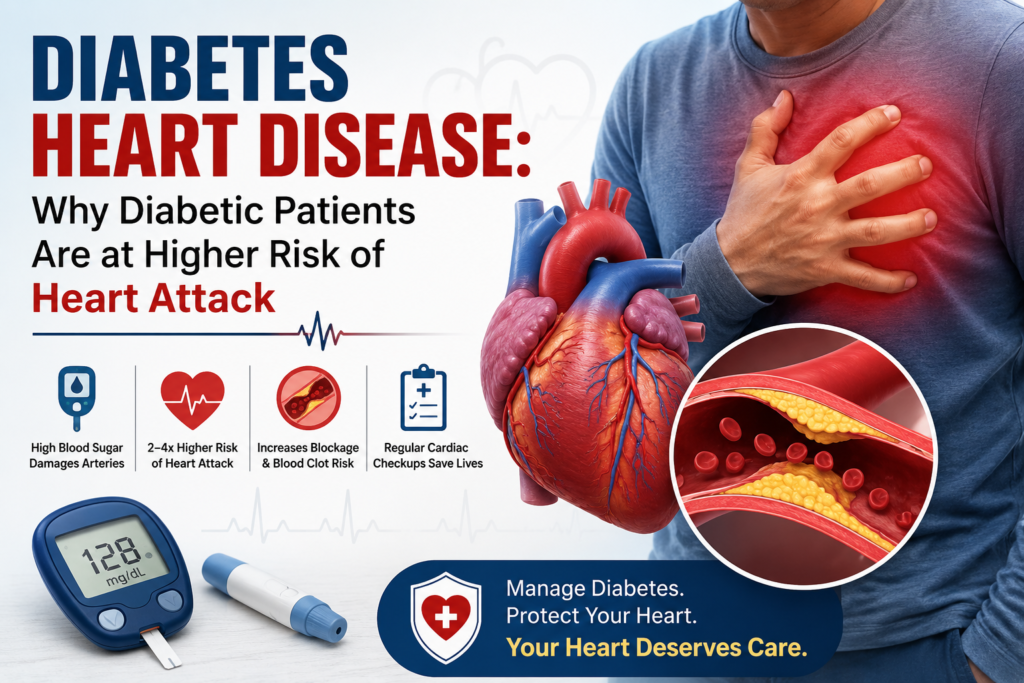
Blood Pressure in Diabetics
Diabetic patients have a lower BP target — below 130/80 mmHg. The combination of diabetes and hypertension dramatically accelerates kidney damage, coronary artery disease, and retinopathy. Dual management is non-negotiable.
Blood Pressure in the Elderly
Isolated systolic hypertension (high top number, normal bottom number) is common in the elderly due to arterial stiffening. Treatment reduces stroke risk significantly — even in patients above 80 years of age.
Blood Pressure in Pregnant Women
Hypertension in pregnancy (including pre-eclampsia) is a medical emergency requiring specialist management. Any pregnant woman with blood pressure above 140/90 mmHg requires immediate evaluation.
Blood Pressure in Young Adults
Hypertension in patients under 40 warrants investigation for secondary causes including kidney disease, hormonal disorders (primary hyperaldosteronism, pheochromocytoma), or coarctation of the aorta.
The Blood Pressure and Kidney Connection: An Often Overlooked Danger
The relationship between blood pressure and kidney health is bidirectional and vicious:
- High blood pressure damages kidney filtering units (glomeruli), reducing kidney function
- Damaged kidneys retain more sodium and water, raising blood pressure further
- This cycle, if unchecked, leads to chronic kidney disease (CKD) and ultimately dialysis-dependent kidney failure
Regular monitoring of kidney function (serum creatinine, eGFR, urine microalbumin) is an essential part of hypertension management — and is routinely performed at Jayam Hrudayalaya as part of comprehensive BP care.
Why Regular Blood Pressure Screening Saves Lives
The statistics are sobering: half of all hypertensive Indians do not know they have the condition. The only solution is systematic, regular screening — for everyone, regardless of symptoms.
Who should screen, and how often:
- Adults above 18 with no known hypertension: At least once every two years
- Adults with BP between 120–129 / less than 80 mmHg: Annually
- Adults with risk factors (family history, obesity, diabetes, smoking): Every six months
- Known hypertensive patients on treatment: At every clinic visit and regular home monitoring
Screening takes less than two minutes. It costs almost nothing. And it can prevent a lifetime of cardiac, renal, and neurological disability.
Regular BP screening and cardiac consultation is available at Jayam Hrudayalaya for patients across Hosapete and Vijayanagara region.
Why Choose Jayam Hrudayalaya for Blood Pressure and Cardiac Care
At Jayam Hrudayalaya, we approach blood pressure management not as a standalone condition but as an integral part of comprehensive cardiovascular health:
- Expert Cardiology Leadership — Dr. T. Sandeep provides personalised hypertension evaluation and management with a focus on preventing cardiac complications
- Comprehensive Diagnostic Facilities — ECG, echocardiogram, ambulatory blood pressure monitoring (ABPM), kidney function testing, and lipid profiling — all under one roof
- Individualised Treatment Plans — medication selection, lifestyle counselling, and monitoring protocols tailored to each patient’s age, comorbidities, and lifestyle
- Dedicated Hypertension Clinic — structured follow-up care for hypertensive patients to ensure BP targets are consistently achieved
- Community Outreach — regular BP screening camps across Hosapete and Vijayanagara region to detect and refer undiagnosed hypertensives
- Accessible and Affordable — world-class cardiac and hypertension care without the need to travel to distant metros
Conclusion: Your Blood Pressure Number Is Your Heart’s Report Card
There is no symptom to wait for. There is no pain that will warn you in time. There is only the number — and what you choose to do with it.
Uncontrolled blood pressure is not inevitable. It is not untreatable. It is not something you must simply live with. With the right combination of lifestyle commitment and medical management, the vast majority of hypertensive patients can achieve target blood pressure, protect their hearts, and live long, healthy, active lives.
Know your number. Control your number. Protect your heart.
Visit Jayam Hrudayalaya today — for blood pressure screening, cardiac consultation, and the expert care your heart deserves.